
The hidden cost of “normal” conversations in autism
In the first piece, we established something important: the communication gap between autistic and non-autistic people goes both ways. It is not a one-sided deficit. It is a mismatch — two different communication systems operating in the same conversation, each making assumptions the other doesn’t share. If you haven’t read that one yet, it’ll give you the foundation for everything that follows here.
This piece goes deeper. We’re going to look at the specific situations where that mismatch causes real problems: small talk, literal language, masking, digital communication, and what happens to autistic people across a lifetime of navigating all of the above. And this time, I want you to actually sit inside some of these moments, not just learn about them, but feel where the friction comes from.
A moment worth pausing on
Before we get into the research and the explanations, I want to ask you something.
Think of a time when you completely misread someone’s tone. Maybe you thought a colleague was annoyed with you, and they weren’t. Maybe you sent a message and spent hours wondering whether it came across wrong. Maybe someone said “fine,” and you spent the next two hours trying to work out what they actually meant.
Hold that feeling for a moment. That sense of uncertainty, of having to guess, of not being sure whether you’re reading the room correctly. Now imagine that is every conversation. Every day. In every room. Without a break.
That is closer to what communication costs for many autistic people – not because we’re bad at connecting, but because we’re constantly operating across a gap that most people don’t notice is there.
Why small talk is anything but small
Most people understand small talk as effortless filler — the social oil that keeps interactions moving. It’s not something you think about; you just do it.
For many autistic people, it is anything but effortless. And I want to be clear: this is not about being antisocial, introverted, or difficult. It’s about what small talk actually asks of a brain that processes things differently.
Consider what’s happening in a typical small talk exchange. “Nice weather today.” There is no clear purpose to that statement. No information gap being filled, no obvious question being asked, no defined expected response.
To engage with it, you have to first figure out why it was said, then determine what kind of response is expected, then calibrate the tone, the length, and the social register of that response — all in the space of a second or two. And then the topic shifts to weekend plans, which shifts to work, which shifts somewhere else, each transition requiring a complete social and contextual reorientation.
This is not casual for a brain that processes language deliberately rather than automatically. The cognitive overhead is high, and the informational payoff is low. Not because the connection isn’t wanted — often it genuinely is — but because the medium is built for implicit, fast, performative exchange, not depth or clarity.
A simple comparison:
“Nice weather today.” Requires: interpretation of intent, social convention, expected brevity, and appropriate reciprocal performance.
“What’s been taking most of your attention lately?” Requires: an honest answer. That’s it.
The second question is not awkward. It’s actually more connected. It gives something real to work with. It invites rather than performs.
This is not a demand for every conversation to be deep and philosophical. It’s a practical observation: specificity and genuine curiosity reduce the decoding load for autistic people enormously. And silence, rather than something to be filled immediately, can be a processing pause rather than a social failure. If you can sit with that without anxiously jumping to fill it, you’re already making the conversation easier for the autistic person in it.
When words mean exactly what they say
Here is a scenario. See if you can spot where it goes wrong.
A manager approaches a member of staff and says, “You might want to take another look at this before it goes out.”
The manager means: This needs to be corrected. This is a directive.
The staff member hears: This is optional feedback. I can look at it if I want.
The report goes out unchanged. The manager is frustrated. The staff member has no idea why.
Nobody lied. Nobody was being obstructive. The entire problem was that the instruction was phrased as a suggestion when it wasn’t one.
This is what happens when neurotypical communication relies on social softening — wrapping a clear message in polite indirection — and the other person takes the words at face value. Which, technically, is exactly what words are for.
Autistic people are often described as being “too literal.” I’d push back on that framing. Literal interpretation isn’t a flaw. The words said exactly what they said. The problem is a mismatch in the assumption that meaning lives between the lines rather than in the lines themselves.
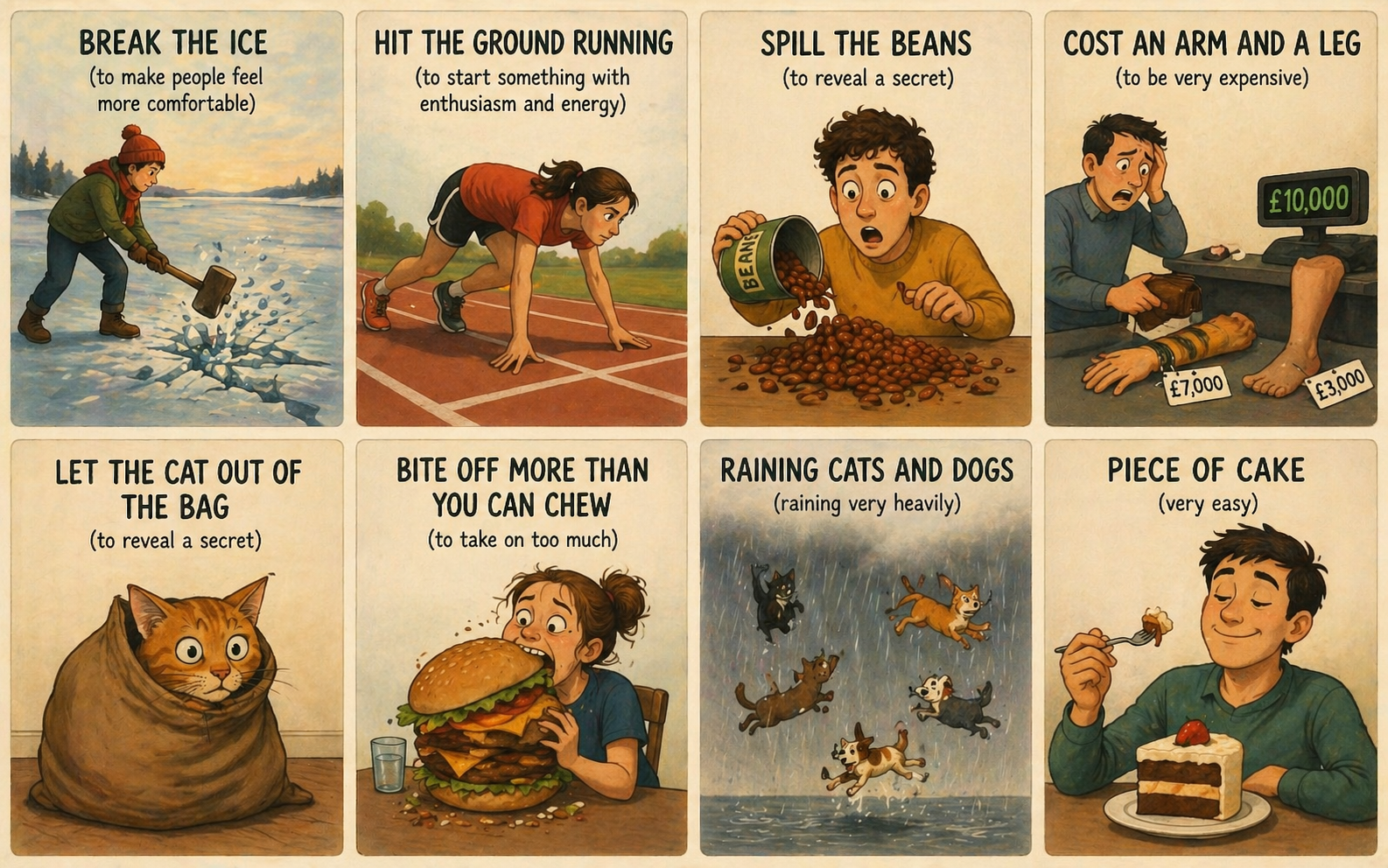
Idioms carry this problem too. “Spill the beans.” “Hit the ground running.” “Break the ice.” None of these mean what they say. For someone who processes language concretely first, each of these is a small puzzle that has to be solved in real time. It adds up. And sarcasm, where the words say one thing and mean the complete opposite, signalled only by tone, can be genuinely ambiguous when tone is hard to read consistently.
None of this is incompetence. It is a different default mode of interpreting a communication system that was built around a different default.
The practical fix is remarkably simple: say what you mean. Not in a cold or blunt way, but directly. “Can you review and correct this today?” is clearer than “you might want to.” And it is, frankly, more respectful. It gives the other person the actual information they need to respond appropriately.
The performance nobody asked for (but everyone expected)
There is something I’ve been doing my whole life that I didn’t have a name for until relatively recently. I’ve been performing. Not lying exactly. Not pretending to be someone else. But constantly monitoring and adjusting how I come across, such as calibrating my tone, managing my facial expressions, timing my responses, suppressing the impulse to rock slightly when I’m thinking hard, and making eye contact even when it makes concentration harder.
Doing all the things that make me look like I’m communicating in the expected way, rather than just communicating. This is masking. And it is exhausting in a way that is genuinely difficult to explain to someone who has never had to do it.
Research has consistently found that masking is emotionally exhausting for autistic adults and can result in burnout due to the cognitive demands required to engage in it regularly, with consequences that extend to anxiety, depression, and stress over the long term.
Autistic masking includes unconscious or conscious attempts to mimic the behavioural, cognitive, or sensory styles of non-autistic people, as well as suppressing natural forms of autistic behaviour, cognition, and reactions to sensory experiences.
Some of it is deliberate, including scripting what to say before a social interaction, rehearsing conversations, and researching what’s expected in a given setting. Some of it is so automatic by now that I don’t always notice I’m doing it until I get home and feel like I’ve been hit by a truck.
That’s what happened yesterday at the gym. I performed, including smiling and laughing in a noisy environment, keeping up with small talk, and reacting in the expected ways, so much so that by the time I got home, I was completely exhausted. I woke up this morning with body aches.
I didn’t even realise I had been masking until I got to the point where I felt like I couldn’t properly walk or talk anymore. That’s when it hit me: I had been masking for over an hour.
Here’s the analogy I come back to: imagine acting in a play all day where the script keeps changing. Everyone else seems to already know their lines. You’re improvising yours in real time while simultaneously matching tone, expression, timing, and emotional delivery to what’s expected in the scene. No rehearsal ever stabilises the rules. And you’re never quite sure when the performance ends.
From the outside, you look fine. Functioning. Engaged. Maybe even warm. But internally, a significant portion of cognitive energy is going into maintaining that presentation rather than actually being present in the conversation.
Research suggests that camouflaging may become increasingly draining with age, as individuals invest more time and energy in performing masking strategies. This is not something that gets easier with practice in the way a skill might. It gets more costly. Which is part of why autistic burnout — explored in depth in an earlier post in this series — tends to compound over time.
The counterintuitive truth here is that the solution is usually less performance, not more. When people don’t have to spend cognitive energy maintaining a social mask, more of that energy becomes available for actual connection, understanding, and engagement. Comfort doesn’t compromise communication. It improves it.
Why texting might not be avoidance but access
Something I’m asked about regularly: why do I often communicate better in writing than face-to-face? Is that a social problem I’m avoiding? No. It’s a medium that actually fits how I process.
Research monitoring smartphone communication over four months discovered that autistic participants consistently preferred written over verbal communication, with written communication offering advantages in self-expression and reducing social anxiety. This preference is supported by literature highlighting the potential of written communication to enhance self-consciousness and self-expression in autistic individuals.
Autistic adults have reported that written Internet-mediated communication provides more control, thinking time, and clarity, and fewer sensory issues and competing streams of information to process and interpret simultaneously.
That is not avoidance. That is a sensible channel choice based on how information is actually processed. Think about it: in a face-to-face conversation, you’re tracking tone, facial expression, body language, background noise, the pace of the exchange, and the content of what’s being said — all at once, all in real time, with no pause button. In writing, you can take the time you need. The words stay still. You can re-read before you respond. You can draft, reconsider, and send something that actually says what you meant.
Research recommends that services should move away from reliance on phone calls and instead offer written options such as email and live messaging, which are more accessible to people with autism. This has implications well beyond individual preferences, affecting whether autistic people can adequately access healthcare, employment support, and education.
Preferring to text rather than call is not a character flaw. Neither is needing more time to reply. A slower response often reflects deliberate processing, not disengagement. If you’re someone who reads unread messages as social rejection, it’s worth sitting with that assumption for a moment. Because the autistic person who hasn’t replied is often composing something thoughtful. They’re just not doing it on your timeline.
Autism doesn’t end in childhood, and neither does the need for understanding
One last thing I want to address, because it comes up constantly. There is still a widespread assumption that autism is primarily a childhood condition — something visible in children that fades, resolves, or becomes irrelevant in adulthood. And it shapes, in deeply unhelpful ways, how autistic adults are treated in workplaces, relationships, healthcare settings, and by themselves.
Autism is lifelong. What changes is visibility, not presence.
In childhood, differences in communication and sensory processing are often more obvious, partly because children have had less time to learn the social rules and partly because there is less pressure to hide. As people move into adolescence and adulthood, many autistic individuals develop sophisticated adaptive strategies. They learn the rules. They mask. They compensate. And from the outside, they can appear entirely “typical.”
But that appearance comes at a cost, as we’ve seen. And the fact that someone has learned to pass as neurotypical does not mean their support needs have disappeared. It means those needs are now being managed privately and often with significant effort.
In adulthood, the signs look different. Less visible behaviour differences and more consequences of sustained adaptation: exhaustion after social interaction, difficulty recovering from sensory overload, needing significant alone time to regulate, and struggling to maintain routines when under additional pressure. These are not new problems appearing from nowhere. They are the long-term effects of a lifetime of cognitive overhead.
The implication is practical. If we only look for autism in children, and only look for it in its most visible forms, we miss most of what’s actually happening for the majority of autistic people. Reducing support as someone grows older because they’ve “learned to cope” assumes that coping and thriving are the same thing. They aren’t.
What actually shifts things
Everything in this piece comes down to the same underlying principle: communication improves when we reduce the ambiguity, the performance pressure, and the assumption that there is only one right way to do it.
That looks like being direct when you need someone to do something, rather than phrasing a directive as a suggestion and hoping they read the subtext.
It looks like replacing “nice weather” with something that actually invites a real answer.
It looks like offering written options alongside verbal ones and not reading a preference for text as evidence of social failure.
It looks like allowing silences to breathe instead of rushing to fill them. It looks like recognising that someone maintaining eye contact and smiling appropriately is not the same as someone being at ease. And that someone who avoids eye contact and needs more time to respond is not the same as someone who isn’t engaged.
Most of all, it looks like dropping the assumption that the autistic person in the room is the only one with adjustments to make.
Communication is mutual. The mismatch is mutual. The work should be mutual too. And when both sides are genuinely willing to show up for that, the gap closes considerably.